Bone and Joint Action Week—You Can Support Healthy Bones and Joints
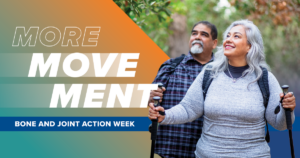
Bone and Joint Action Week takes place each year during the month of October (Oct. 12-20). This focus was initiated in January 2000 to increase awareness for musculoskeletal and joint health. It has become a worldwide event and is sponsored by the United States Bone & Joint Initiative (USBJI).
The USBJI organizes the Bone and Joint Action Week, an annual event focusing attention on a selection of musculoskeletal disorders such as osteoporosis, arthritis, back pain and more.
Bone and Joint Health Is a Lifelong Journey
More than 50% of American adults are affected by bone and joint conditions. However, bone and joint health impact every age group. Once you understand how, you can improve bone and joint health for yourself, your older family members and even your children.
Bone is a living tissue that continuously grows and is composed of calcium and collagen. Calcium is the mineral that makes bones strong while collagen is a protein that gives bones their resiliency. Bones begin developing in utero and continue growing as we age into early adulthood.
We gain nearly 90% of our bone mass by age 18 for girls and age 20 for boys. By the age of 30, bones have achieved peak bone mass, meaning they are at their maximum bone strength and density. As we reach our mid-30s, our bones slowly begin to lose mass, leading to increased risk for bone disease, osteopenia (chronic low bone mass) and osteoporosis.
Increased Impact on Overall Health and the Economy
Bone and joint conditions are the most common reasons for severe long-term pain and physical disability worldwide. Musculoskeletal conditions can lead to significant disability plus diminished productivity and quality of life. Treatment and lost-wage costs associated with musculoskeletal diseases in the U.S. alone were estimated at $874 billion from 2009 to 2011, equal to 5.73% of gross domestic product.
Together We Can Support Bone and Joint Health
We can make significant strides to better bone and joint health through three types of exercises:
- Weight-bearing exercises
- Resistance training
- Balance training
Weight-bearing exercises put a force on our bones to make them work harder. These include brisk walking, jogging or running, racket sports, climbing stairs and dancing.
Resistance training, or weightlifting, adds resistance to movement and makes muscles work harder so they become stronger. We can take advantage of resistance training with weight machines, free weights, resistance bands or bodyweight exercises like pushups and pull ups.
Balance training is especially important for older adults since it can improve balance and help prevent falls. Examples include walking on an unstable surface, Tai Chi, walking backwards, step-ups or lunges.
The U.S. Department of Health and Human Services notes that adults of all ages should get at least 150 minutes each week of moderate-intensity exercise or 75 minutes per week of vigorous-intensity exercise. For older adults, the 150 minutes should include a mix of balance training, aerobic and muscle-strengthening exercises.
Vitamins Play a Vital Role
Calcium and vitamin D are two key nutrients our bodies need to keep our bones strong. Since our bodies are unable to produce calcium, we need to get it from what we eat and drink. Not only does calcium help build strong bones, it helps our muscles, heart and nerves work properly.
The best sources of calcium are milk and other dairy products. Other foods help provide the calcium we need, including fish such as salmon and tuna; leafy green vegetables like kale and turnip greens; tofu; and small fish with bones, including sardines and canned salmon.
Vitamin D promotes bone health by helping the body absorb calcium from food, helping older adults prevent osteoporosis and supporting healthy muscle and immune system function.
Learn more: talk to one of our healthcare professionals today about how we can help you support bone and joint health!