

Published
If symptoms are stable, start with a walking goal
Base the decision on what stops you from standing or walking, not on the MRI alone. If your goal is to reach the bus stop without sitting down, use that trip to judge whether treatment helps. Activity changes and physical therapy are reasonable starting points. If leg symptoms still keep you from everyday tasks, a surgical opinion is reasonable. An injection is not a necessary step before a surgical opinion for everyone. [1]
With neurogenic claudication, standing or walking brings on aching, heaviness, tingling or numbness in the buttocks or legs. Sitting or leaning forward often helps. Back pain alone is a different problem. Your clinician can check your strength, sensation, hips and circulation, then see whether the exam fits the scan. Narrowing in the main spinal canal may affect you differently from narrowing where one nerve exits. A slipped vertebra, or movement between spinal bones, can also change the plan. [1]
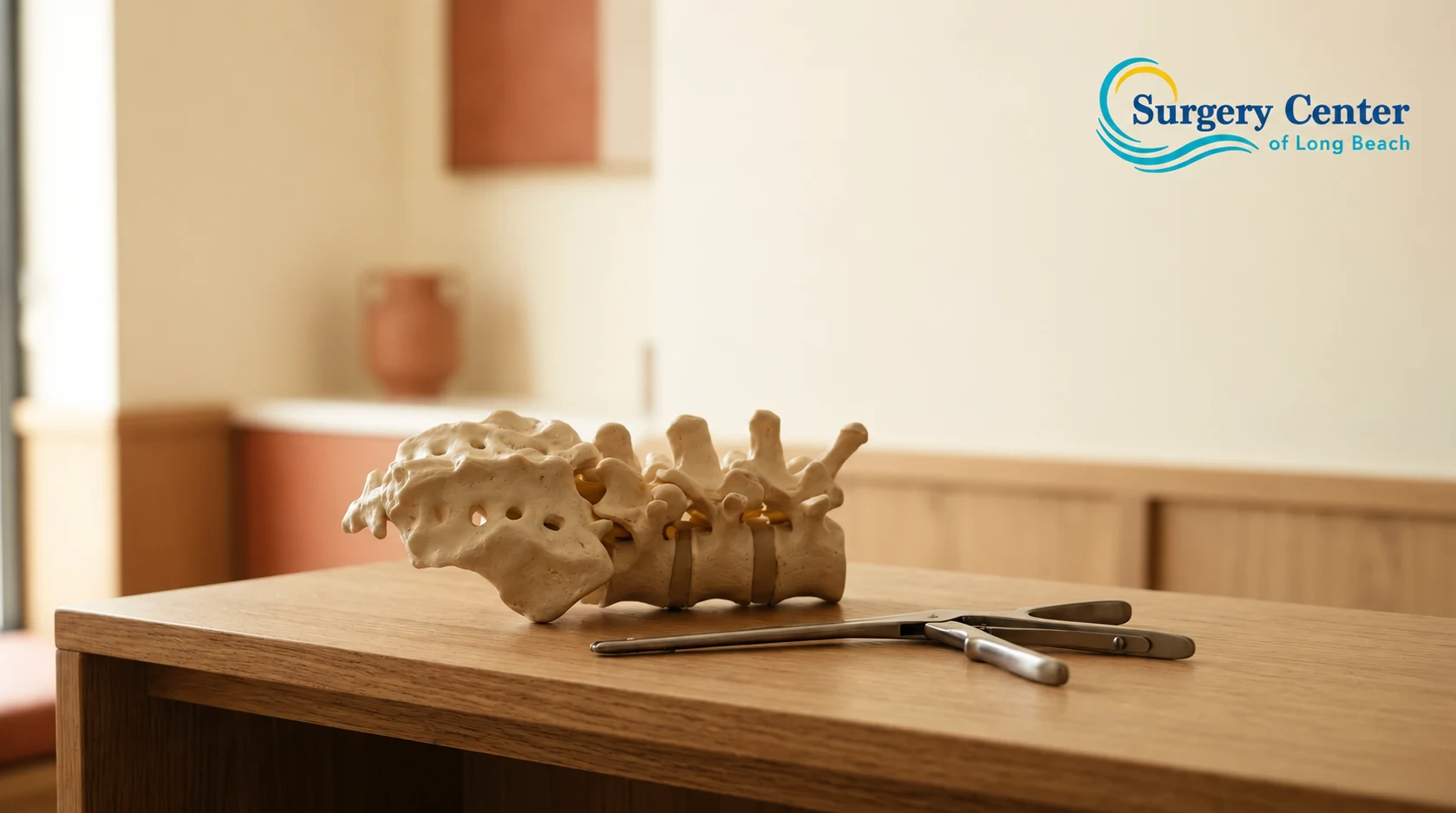
Compare your nonsurgical options
| Option | What to try or ask | How to judge it |
|---|---|---|
| Activity changes | Split an errand into shorter trips, choose a route with seats, or ask whether a stationary bike or walking aid would suit you. | Track one familiar task: how far you go, what makes you stop and what lets you start again. Agree on when to reassess. [1] |
| Physical therapy | Ask for exercises suited to your strength, balance and symptoms, with a plan you can follow at home. | Look for a change that matters outside therapy, such as standing long enough to prepare a meal. Report declining strength rather than trying to exercise through it. [1] |
| Medicines | Ask whether the aim is to ease an ache, reduce leg pain or improve walking. These are not the same outcome. | In 90 people whose main symptom was neurogenic claudication, adding gabapentin or pregabalin to care that included therapy and naproxen did not improve pain or walking more than placebo over four months. Dizziness and drowsiness were more common with the drugs. This is not a reason to stop a prescription on your own. [2] |
What would an epidural injection treat?
NICE guidance for England advises against epidural injections for walking symptoms from central canal stenosis. It distinguishes that problem from recent, severe sciatica, for which an epidural injection may be considered. Ask which pattern you have. [3]
In a trial of 400 adults with central stenosis and moderate-to-severe leg pain and disability, adding steroid to an epidural lidocaine injection offered little or no extra improvement in leg pain or daily function at six weeks. Both groups had an injection; this was not a comparison with no procedure. Rare but serious harms reported after epidural steroid injections include spinal cord injury, paralysis, stroke, vision loss and death. [4] [5]
When is decompression worth considering?
If leg symptoms still limit work, shopping or independent walking, compare continued nonsurgical care with decompression—surgery to make room for affected nerves. Decompression tends to help leg symptoms more than pain confined to the lower back. Ask separately about pain, walking and strength; improvement in one does not guarantee improvement in all three. Risks include infection, a tear that leaks spinal fluid, nerve injury and symptoms that persist or return. [1]
One randomized trial in surgical candidates found no clear difference in reported physical function at two years between people assigned to decompression and those assigned to structured physical therapy. More than half assigned to therapy went on to have surgery. That makes it hard to tell what therapy alone achieved; the trial does not prove the treatments are equivalent. [6]
Fusion, which joins spinal bones, is a separate decision. If it is proposed, ask how a slip, movement on bending X-rays or the amount of bone that would be removed affects the choice. Compare the expected benefit and risks with decompression alone. The procedure and setting depend on your findings and health. For procedure details, start with our lumbar laminectomy procedure page and guide to the pressure laminectomy is meant to relieve. [1]
Prepare for home and follow-up
Give the surgical and anesthesia teams a complete medicine and supplement list, including blood thinners and diabetes or weight-loss medicines. Ask for one written plan for medicines and fasting. If instructions conflict, call before changing a dose. If your procedure is scheduled with us, our surgery preparation guide asks you to arrange a ride home and plan for someone to stay with you for 24 hours afterward. Tell us before surgery if that will be difficult. Ask whether you will need help longer. [7]
Before discharge, review incision care, pain medicine, constipation, stairs and follow-up with your companion. Once cleared, start with manageable walks. Ask whether you need therapy for balance, strength or endurance, and what limits apply to lifting, driving and your work. At follow-up, return to your original goal: “I can reach the bus stop now, but my foot is still numb” gives the team more to work with than a pain score alone. [8]
Questions to take to your appointment
Diagnosis and choice
- Does the narrowing match what stops me from walking, or should we also check my hips or circulation?
- What walking goal should we track, and when should we reconsider the plan?
- If you suggest an injection, which symptom should improve enough for me to notice?
- What might decompression change compared with continued therapy? If you suggest fusion, what would I gain over decompression alone?
Before surgery
- What tests or health concerns affect where I can safely have surgery?
- When should I stop eating and drinking, and whom should I call if my instructions conflict?
Medicines and other health conditions
- Which medicines and supplements should I take, pause or restart, and who will give me the written plan?
- How do my health conditions, such as diabetes or sleep apnea, affect anesthesia and pain control?
Companion and home support
- Can my companion and I practice using my walking aid or managing stairs before I leave?
- What help will I need with meals, bathing and getting to appointments if I live alone?
Recovery
- How should I increase walking, and what would make formal physical therapy useful?
- What should I be able to do safely before driving, lifting or returning to my particular job?
- Who will check my incision, leg strength and progress toward my walking goal?
Urgent help
- Which changes mean an emergency department visit or a 911 call rather than a call to the office?
- Which number on my discharge sheet should my companion use for an urgent nonemergency concern at night?
When to get urgent help
After lumbar surgery, call 911 for chest pain, trouble breathing or collapse. If someone who took opioid pain medicine is very hard to wake or is breathing slowly, call 911. [9] [10]
With back or leg pain, go to an emergency department now if you develop trouble starting to urinate or feeling urine flow; cannot tell when you need to pass stool; lose feeling around the genitals or anus; notice a new loss of sexual feeling or function; or have severe or worsening weakness in both legs. These can be signs of cauda equina syndrome—pressure on nerves that control the bladder, bowel and legs. One warning sign is enough. Do not wait for it to become constant or until you cannot urinate. [11] [12]
If shooting pain suddenly starts in both legs or spreads from one leg to both, contact a clinician right away for urgent assessment, even without the warning signs above. This is different from familiar leg aching when you walk. Report a newly dragging foot or loss of strength in one leg promptly, too. [12]
After lumbar surgery:
- Go to an emergency department now for new leg weakness—even in one leg—new numbness around the genitals, or a new problem with bladder, bowel or sexual function after decompression. Clear, watery leakage from the incision with a headache or fever also needs emergency assessment. [8]
- New calf pain or swelling in one leg: call your surgical team now for same-day assessment of a possible blood clot. If you cannot reach the team for prompt assessment, go to an emergency department. For increasing wound redness, pus, fever or worsening wound pain, contact the surgical team right away using your discharge instructions. If you have a fever with wound redness or swelling, or cannot reach the team promptly, go to an emergency department. [8] [9]
After surgery, follow the contact instructions on your discharge sheet. For a nonemergency concern that cannot wait until the next office day, call your physician’s practice number and use the answering-service option after hours, on weekends or on holidays. For routine matters, use the regular office message process.
Learn More
- American Academy of Orthopaedic Surgeons OrthoInfo: Lumbar Spinal Stenosis
- Chotigavanichaya et al.: Efficacy of gabapentin and pregabalin for the treatment of neurogenic claudication in lumbar spinal stenosis
- NICE NG59: Low back pain and sciatica in over 16s, recommendations
- Friedly et al.: A randomized trial of epidural glucocorticoid injections for spinal stenosis
- FDA prescribing information: Serious neurologic adverse reactions with epidural corticosteroid administration
- Delitto et al.: Surgery versus nonsurgical treatment of lumbar spinal stenosis: a randomized trial
- Surgery Center of Long Beach: How to prepare for surgery
- Cambridge University Hospitals: Post-operative recovery following lumbar decompression surgery
- NHS: DVT (deep vein thrombosis)
- MedlinePlus: Opioid Overdose
- American Association of Neurological Surgeons: Cauda Equina Syndrome
- National Spine Network: Cauda Equina Syndrome and current GIRFT pathway guidance
Sources checked November 26, 2026.