

Published
A night wrist splint, a corticosteroid injection, and release surgery address carpal tunnel symptoms in different ways. A splint may help intermittent nighttime symptoms; an injection may provide quicker but usually temporary relief; surgery opens the tunnel's roof to reduce pressure on the median nerve. The right discussion depends on your symptoms, examination, nerve function, and how much your hand use is affected. Persistent numbness or worsening thumb weakness warrants reassessment rather than simply waiting for a trial of home treatment to end.
First, does the symptom pattern fit?
The median nerve passes through a narrow tunnel at the wrist. Compression can cause tingling or numbness in the thumb, index and middle fingers, and thumb-side part of the ring finger. Symptoms often wake people at night or appear while holding a phone or steering wheel. The little finger is usually spared. A clinician can compare the symptom pattern with examination of sensation and thumb strength, and consider other nerve problems when the pattern differs.
The 2024 AAOS carpal tunnel guideline supports a clinical symptom-and-examination tool called CTS-6 for diagnosis. Ultrasound or nerve-conduction testing may still be useful in selected cases, especially when symptoms are unusual or another condition is possible. Ask what a test would change about the treatment decision.
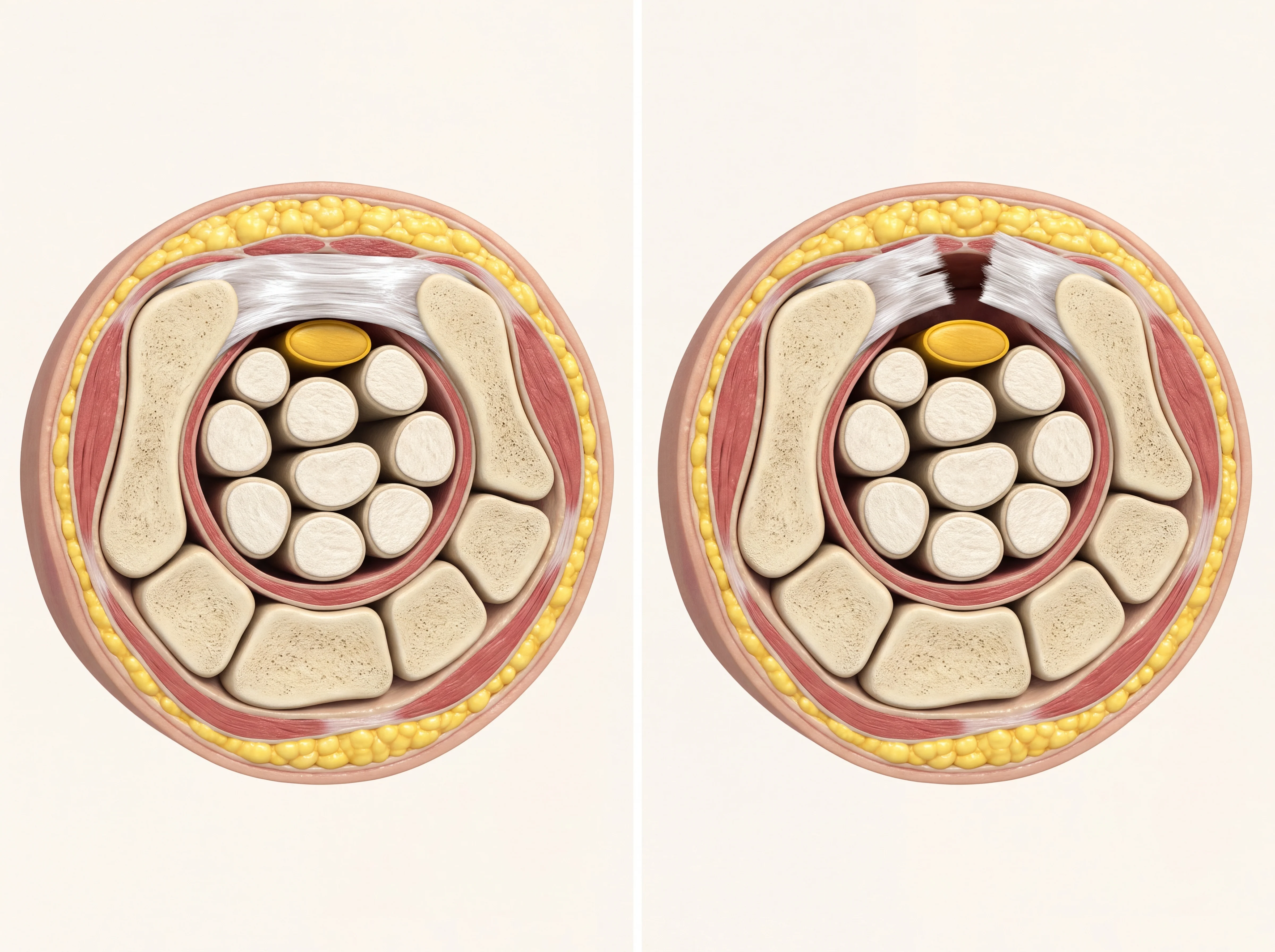
- 1Intact transverse carpal ligament before release.
- 2Median nerve beneath the ligament.
- 3Flexor tendons within the tunnel.
- 4Carpal bone arch around the tunnel.
- 5Divided ligament after release, with the nerve intact.
How do the options compare?
| Option | What it aims to do | What to discuss |
|---|---|---|
| Night wrist splint | Keep the wrist from bending while you sleep. | Fit, comfort, what improvement to look for, and when to reassess. |
| Corticosteroid injection | Reduce symptoms without an operation, often for a limited time. | How long benefit may last, risks specific to you, and a plan if symptoms return. |
| Release surgery | Divide the ligament over the tunnel to give the median nerve more room. | Open or endoscopic approach, anesthesia, risks, and which symptoms may persist. |
The 2023 Cochrane review found that night splints may improve how some people feel, while average symptom and function benefits compared with no active treatment were small or uncertain. A practical splint trial should have an observable goal, such as fewer awakenings, and a planned review if daytime numbness or hand function does not improve.
In the INSTinCTS randomized trial, 234 adults in UK primary care with mild or moderate symptoms received an injection or a night splint. The injection group had better average symptom and function scores at six weeks; by six months the difference was not clear. The AAOS guideline concludes that steroid injection does not provide long-term improvement. Relief after an injection can be valuable, but it should not be treated as proof that pressure on the nerve has permanently resolved.
When is surgery worth discussing?
Release surgery can be considered when symptoms remain troublesome despite nonsurgical care, or when there is constant numbness, progressive weakness, or evidence of more serious nerve involvement. The operation divides the ligament forming the tunnel's roof. It does not remove the median nerve. Severe or longstanding nerve damage may not fully recover, so ask which symptoms are most likely to improve and which may remain.
The 2025 DISTRICTS randomized trial compared starting with surgery against starting with a steroid injection in 934 people at 31 Dutch hospitals. Additional care was allowed in either group. Among those with an 18-month symptom score, 243 of 401 people (61%) in the surgery-first group met the trial's recovery definition, compared with 180 of 404 (45%) in the injection-first group. This supports a discussion of surgery first for people like those studied; it does not show that every person with new, occasional tingling needs surgery or that injection alone had a 45% success rate.
If surgery is being considered, see our guide to endoscopic and mini-open approaches. The treatment decision comes before the choice of approach. Ask what anesthesia is planned, how your hand will be protected, and how work or caregiving tasks affect the recovery plan. Your surgeon should provide your own instructions.
When should you check back?
Tell your clinician if numbness stops clearing between episodes, you lose pinch strength, or the muscle at the base of the thumb seems to shrink. Arrange follow-up if a splint has not helped you sleep or use your hand, or if injection relief fades. Report what improved and what did not. The aim is to reassess nerve function and decide whether the current strategy still fits.
Questions for your appointment
- Which findings point to the median nerve at my wrist? Would testing change our plan?
- Do I have signs of nerve damage that make waiting less advisable?
- If I try a splint, what is the goal and when should we review it?
- If I choose an injection, what is the plan if symptoms return?
- If I consider release surgery, what benefit and limitations are realistic for my hand?
See the center's carpal tunnel overview for more background. Treatment choices and individualized restrictions belong with your hand specialist and care team.
Sources
- AAOS Clinical Practice Guideline: Carpal Tunnel Syndrome (2024)
- AAOS OrthoInfo: Carpal Tunnel Syndrome
- Cochrane: Splinting for Carpal Tunnel Syndrome
- INSTinCTS randomized trial, PubMed
- DISTRICTS randomized trial, PubMed
Sources checked November 20, 2026. This article is general education and does not replace advice from your own care team.